|
Tips for Driving Responsibly while Using Your Cell Phone
by Jim Hanks
Safety issues regarding
driving and cell phone use have received a great deal of attention lately and,
as a result, numerous research studies have been performed. Some studies say
that cell phones are responsible for an alarming number of accidents. Others
say that talking on the phone is no less dangerous than eating while driving,
which seems to provide some people with a rationale for unrestricted cell phone
useeven though eating while driving is distracting, as well.
Nonetheless, all of the
studies admit one thing: cell phones are a distraction. Consequently, many local
governments want to implement a variety of restrictionsfrom requiring drivers
to wear headsets to banning cell phone use on roads altogether. Because let's
face it, you really shouldn't be doing anything while driving, but driving.
Whether or not legislation
is enacted in your area, if you use a cell phone in the car you should behave
as responsibly as possible. And by following a few simple suggestions, you can
keep roads a lot saferfor pedestrians, for fellow drivers, and for yourself.
Safety tips
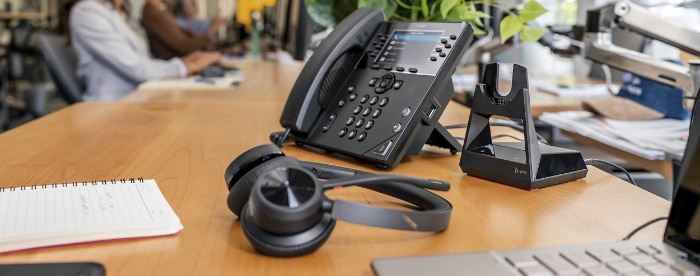
Buy a headset
Headsets keep your hands on the wheel and your eyes on the road. They also prevent the
loss of peripheral vision caused when you hold a phone to your ear. Initially,
cellular headsets were awkward and uncomfortable to wear; however, the ubiquity
of mobile phones and intense competition have led to a lot of innovative headset
designs. While remaining unobtrusive, they can significantly improve the sound
quality of your conversation. A
variety of models are available through Hello Direct: everything from wireless
headsets to in-the-ear models (that don't require microphone booms).
Mount your phone
Most cellular phone companies offer car kits that can be mounted on your vehicle's
dashboard. These kits usually include microphones and speakers, and a few models
use your stereo's speakers, instead. When inserted into the docking station,
your cell phone is immediately converted to a speakerphone while the battery
is charged. If you have more than one cellular phone in your family, make sure
you choose a car kit that is compatible with different models, and different
manufacturers. Many kits are compatible with multiple brands and models, so
you may not need to get more than one kit for the family car.
Make cellular voice mail
more accessible
Since most people call their home or office voice mail more often than any other
number, there are a few things you can do to significantly reduce the number
of times you need to look at your phone. Almost all mobile phones allow you
to program pauses (they are usually signified by a "p" or a comma). After your
voice mail's phone number, program a pause and then enter your password. Then,
when naming the entry, use something like Zmail, so you can access it with a
minimal number of buttons. (With Nokia phones, the last entry in your address
book can be accessed with 2 button presses: "scroll down" and then "scroll
up.").¹ In such a scenario, you can listen to your voice mail by pressing just
3 buttons (the third being "send").
Turn up the volume
When you get in the car, turn up the volume on your cell phone so you can hear
initial rings. When you miss them, you're more likely to be distracted as you
rush to catch callers before they roll into voice mail. Also, when you're on
a call, turn up the volume so you don't have to concentrate on hearing the caller's
voice.
Avoid dialing while driving
If you're in the car with others, let someone else place (or answer) a call
while you concentrate on the road. If you need to talk, let your passenger hand
you the phone once the call has been dialed (or answered). Additionally, some
higher-end phones with speech recognition software allow you to speak a person's
name in order to dial their number.
Be aware of your surroundings
In addition to dialing, another major distraction of cell phone use is poor
reception, and your response to it. When you cannot make a call or begin to
lose the one you're already having, it's common to get angry and to repeatedly
look at your cell phone's LCD to determine the area's coverage. On the coast
of Lima, Peru, in fact, so many accidents have occurred from this specific type
of distraction (caused by poor reception due to coastal cliffs) that cell phone
use has been banned in many coastal areas there.
If you're approaching a
low coverage area (such as a tunnel or a mountain pass) terminate the call voluntarily.
Also, don't make or take calls when you're in heavy traffic, near an intersection,
or exiting/entering a highway.
Take important calls
only
There aren't many conversations that can't wait until you've arrived at your
destination or that can't be postponed until you pull over. Tell clients you'll
call back because they deserve your full attention.
Concluding remarks
In the time it takes to glance at your cell phone a lot can happena stoplight
can turn red, someone can walk in front of your car, a dog can wander onto the
road, another driver can suddenly hit the brakesand in that split second, an
accident can easily take place. So follow these very simple suggestions and
keep everyone on the road a little safer.
|